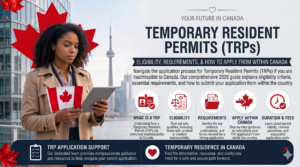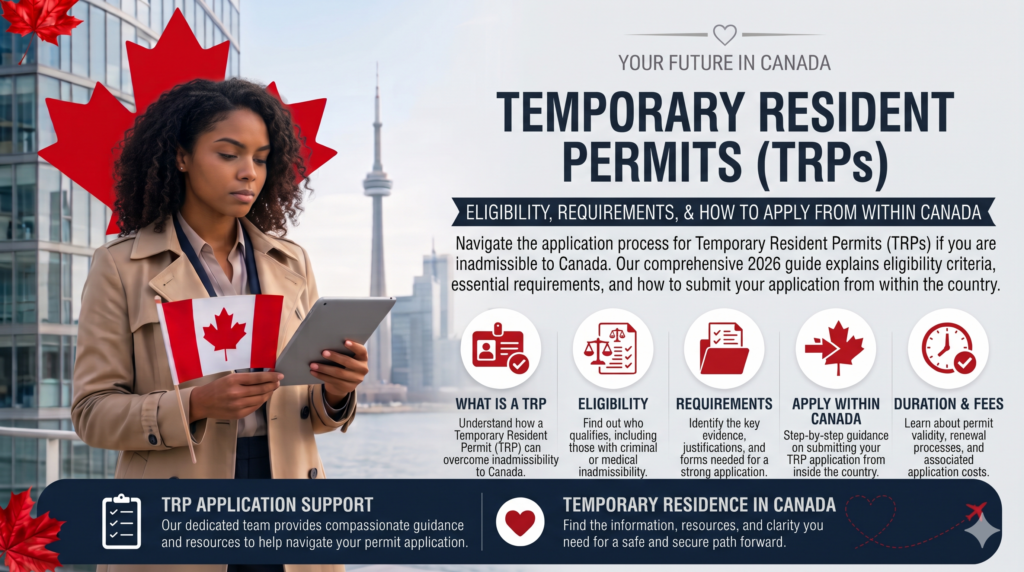
Figuring out Canada’s immigration system can feel like an uphill battle, especially if you hit a sudden roadblock that keeps you from entering or staying in the country legally. While regular visitor visas, study permits, and work permits are great for people who check all the standard boxes, Canada actually has a built-in safety net for those who don’t have the Temporary Resident Permit.
If you’re already living in Canada and realize you’re inadmissible or have somehow slipped out of legal status, a Temporary Resident Permit TRP Canada can give you a lawful bridge to stay. Based on real-world legal practices and guidelines, this guide walks you through what a TRP is, who qualifies, what you need to put together, and how to file your application from right here in Canada.
What Is a Temporary Resident Permit (TRP)?
Think of a Temporary Resident Permit as a special pass given to foreign nationals who either can’t legally enter Canada or have broken a rule under the Immigration and Refugee Protection Act (IRPA).
Unlike a regular visitor visa or study permit, a TRP doesn’t give you permanent legal relief, nor does it magically erase or “cure” whatever made you inadmissible in the first place. Instead, it’s a discretionary tool. An immigration or border officer will only hand one out if they genuinely believe that your need to be in Canada outweighs any potential risk to Canadian society.
Inadmissibility vs. Not Meeting IRPA Requirements
- Inadmissibility: This means you are legally blocked from coming into or staying in Canada. Common reasons include past criminal trouble (like a DUI charge), security risks, human rights concerns, medical issues, or financial instability.
- Not Meeting IRPA Requirements: This usually means you messed up a technical rule or let your status lapse. Think of things like overstaying your authorized time, picking up a job or classes without permission, slipping across the border without a proper check, or holding an expired passport.
Who Is Eligible to Apply from Within Canada?
To get an initial or follow-up TRP while you’re inside Canada, Immigration, Refugees and Citizenship Canada (IRCC) looks for a few firm criteria:
- Foreign National Status: You cannot be a Canadian citizen or a permanent resident.
- Inadmissibility or Non-Compliance: You have to fit into one of the barred or rule-breaking categories mentioned above.
- No Current Status: Most folks applying from within Canada are doing so because their temporary status has already expired or been breached.
- Compelling Reasons to Stay: You need a really good reason to stick around. Routine personal convenience doesn’t cut it; your justification has to be strong enough to push past standard immigration boundaries.
Special Circumstances for Vulnerable Groups
Canada cuts some slack for vulnerable folks—like human trafficking victims, people escaping domestic abuse, or individuals who used to be in state care. In these sensitive situations, fees are often waived, and the TRP acts as a safety blanket while they get back on their feet or figure out their next moves.
Core Requirements for a TRP Application
Because getting a TRP depends heavily on an officer waking up on the right side of the bed and choosing to use their discretion, your application has to hit two notes perfectly: prove why you genuinely need to be here, and prove that you aren’t a threat to anyone.
- Valid Passport or Travel Document: Even if your status has run out, hang onto your current identity documents—they are essential.
- Detailed Personal Statement: This is the heart of your entire file. You need to write a deeply honest, detailed explanation of why you’re inadmissible or out of compliance, why you have to stay in Canada, and any positive background factors that balance things out.
- Corroborating Evidence: Back up your claims with physical proof. Toss in doctor’s notes, employer letters, proof of family connections, court records or rehabilitation papers (if it’s a legal issue), or support letters from shelters and social workers (if you’re dealing with abuse or trafficking).
- Proof of Financial Support: Show that you have enough money to take care of yourself (and any dependents) during your requested stay without needing government handouts.
- Fee Payment Receipt: Proof that you paid the standard processing fee online, unless you managed to get a humanitarian fee exemption.
Step-by-Step Guide: How to Apply from Within Canada
Unlike a lot of modern online portals, initial application for temporary resident permit canada submissions filed from inside Canada are still old-school paper submissions sent by mail to a designated processing hub. When preparing your temporary resident permit canada application, here is how to tackle it step by step:
Step 1: Check the Document Requirements
Take a close look at the official IRCC document checklist (like IMM 5557) so you don’t miss a single form or piece of evidence for your specific situation.
Step 2: Complete Your Immigration Forms
- Fill out the main application form: IMM 5708 (Application to Change Conditions, Extend my Stay or Remain in Canada as a Visitor or Temporary Resident Permit Holder).
- If you’re trying to grab a work permit or study permit alongside your TRP (assuming your TRP is long enough to justify it), throw in the extra forms you need, like IMM 5710 for work permits.
- Add any extra required paperwork, such as IMM 5476 (Use of a Representative) or IMM 5409 (Statutory Declaration of Common-Law Union).
Step 3: Pay Fees Online
Pay the standard TRP processing fee through the official IRCC website. Print out two copies of the receipt: staple one right to the front of your application package and stash the other safely in your own files.
Step 4: Mail Your Package
Gather your forms, personal letter, evidence, and fee receipt into a sturdy envelope. Check your postage at the post office, and mail the whole thing off to the official intake address:
New Waterford Digitization Centre
Temporary Resident Permits
P.O. Box 8400
Sydney, NS B1P 0G6
A Crucial Warning Regarding Your Legal Status
When you apply to extend a regular work or study permit from inside Canada, you usually benefit from something called maintained status (used to be called implied status), meaning you can legally stay put while waiting for a decision.
TRPs do not work this way.
Submitting an initial TRP application from inside Canada does not give you a shield to keep your legal status intact. If your previous temporary status expires while IRCC is looking over your TRP file, you are technically out of status during that waiting period until a final call is made.
Because TRPs require walking a legal tightrope and depend completely on strict officer discretion, a lot of applicants find it smart to chat with a qualified Canadian immigration lawyer or community legal clinic before dropping their paperwork in the mail.
Frequently Asked Questions (FAQs)
1. What is the difference between being inadmissible and not meeting IRPA requirements?
Inadmissibility means you are legally blocked from entering or remaining in Canada due to serious issues like past criminal history (such as a DUI), medical concerns, security risks, or financial instability.
Not meeting IRPA requirements refers to technical or status violations, such as overstaying your authorized period of stay, working or studying without proper permission, or holding an expired passport.
2. Can a Temporary Resident Permit (TRP) erase or “cure” my past inadmissibility?
No. A TRP does not grant permanent legal relief or permanently erase an underlying inadmissibility. Instead, it serves as a temporary, discretionary authorization issued by an immigration or border services officer when they decide your compelling need to be in Canada strongly outweighs any potential risk to Canadian society.
3. What constitutes a “compelling reason” to stay in Canada for a TRP?
Routine personal convenience or preference is never enough to satisfy IRCC guidelines. To qualify, your justification must be urgent and substantial enough to override standard immigration rules—such as pressing family ties, urgent medical needs, or other exceptional circumstances. Canada also provides special humanitarian considerations and fee waivers for vulnerable groups like human trafficking victims and survivors of family violence.
4. How do initial TRP applications filed from within Canada get submitted?
Unlike many standard online immigration streams, initial TRP applications filed from inside Canada are traditional paper-based submissions sent by mail. You must gather your completed immigration forms (such as IMM 5708), a detailed personal statement, supporting evidence, and your online fee receipt, and mail the complete package to the designated intake address at the New Waterford Digitization Centre in Nova Scotia.
5. Does applying for a TRP from within Canada protect my legal status while waiting for a decision?
No. Unlike standard work or study permit extensions, which often grant “maintained status” (formerly called implied status) to keep you legal while a decision is pending, TRPs do not work this way. Submitting an initial TRP application from inside Canada does not shield you from losing status if your previous temporary resident status expires during the waiting period.