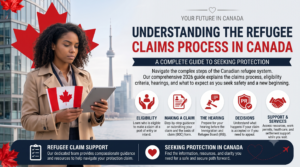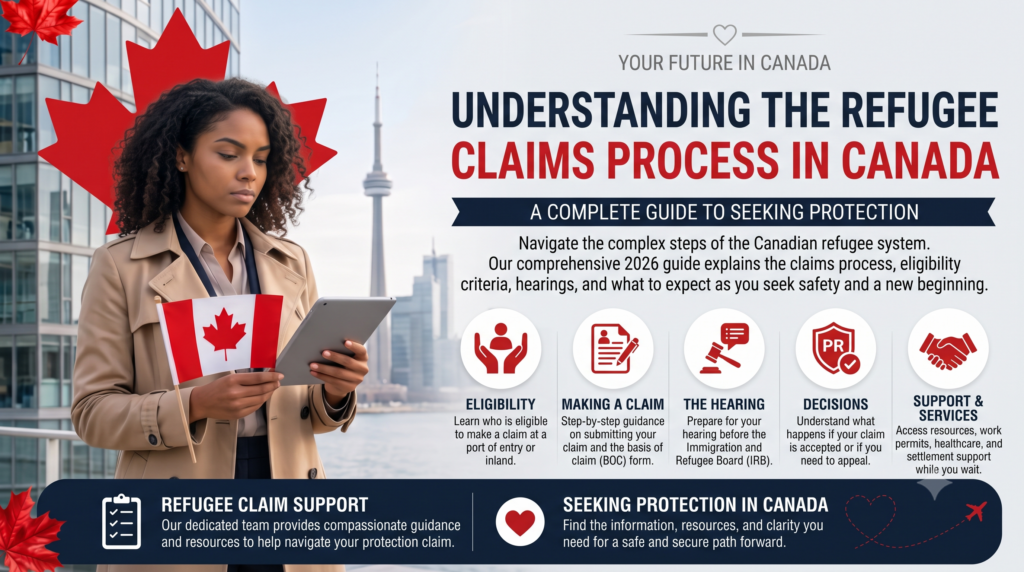
Canada has long held a global reputation for taking in people who are fleeing war, political repression, and life-threatening danger. But for anyone actually standing at the beginning of the Refugee Claims Process, it quickly becomes clear that goodwill isn’t enough. The Canadian refugee system is a strict legal machine with complicated paperwork, tight timelines, and heavy burdens of proof.
If you or someone you know is considering how to Claim Refugee Status Canada , whether right at the airport or after living in the country on a temporary visa, it helps to know what you’re up against step by step.
First Off, Who Legally Qualifies?
A lot of people confuse personal hardship with legal refugee status. Under Canadian immigration law, not every difficult situation back home qualifies you for asylum.
The tribunal that hears these cases, the Immigration and Refugee Board of Canada (IRB), operates under the Immigration and Refugee Protection Act. They look for very specific legal conditions. To get approved, an applicant must prove they fit into one of two categories:
1. Convention Refugees
This applies if you cannot return to your home country because you have a genuine, well-founded fear of being persecuted. But that persecution must be directly tied to one of five reasons:
- Your race or ethnicity
- Your religion
- Your nationality
- Your political opinions (or opinions authorities think you hold)
- Your membership in a specific social group (like being targeted for your sexual orientation, gender, or family ties)
2. Persons in Need of Protection
This category covers people who are already inside Canada and would face direct, personal risk if sent back home. That risk must involve torture, a threat to life, or severe, unusual punishment.
Where many claims fail: General hardship doesn’t count. If you’re running away from high crime rates in your city, economic collapse, or a natural disaster, Canadian law generally won’t consider you a refugee unless you can prove you are being targeted personally.
How Do You Actually Start a Refugee Claims Process?
Where you are physically located when you ask for help changes how your application starts.
Option A: At the Border or Airport (Port of Entry)
When you land at a Canadian airport, cross a land border, or arrive at a seaport, you can tell the Canada Border Services Agency (CBSA) officer right away that you want to file a canada refugee claim to seek protection.
The officer will interview you on the spot, check your passport and identity documents, take your fingerprints, and take your photo. They do a fast background check to see if your file can even move forward.
Option B: From Inside Canada (Inland Claims)
If you entered Canada legally on a visitor visa, student permit, or work visa, or even if you crossed the border unannounced earlier, you file your claim online. You have to fill out and submit your refugee application canada through the digital portal run by Immigration, Refugees and Citizenship Canada (IRCC).
Step 1: The Initial Gatekeeping Check
Just submitting your paperwork doesn’t mean you automatically get a full court hearing. Immigration officials do a screening first to see if your claim is eligible.
Your claim will get blocked immediately if:
- You’ve already been given refugee status by another safe country.
- You made an asylum claim in Canada in the past that was rejected, abandoned, or pulled back.
- You have a serious criminal background or are labeled a security risk.
- You crossed into Canada from the U.S. at a land border and fall under the Safe Third Country Agreement, unless you meet an exception (like having immediate family already living legally in Canada).
If you pass this check, your file moves to the IRB’s decision-making unit, the Refugee Protection Division (RPD). You’ll get an official document called a Refugee Protection Claimant Document, which serves as your legal ID inside Canada while your case is open.
Step 2: The Basis of Claim (BOC) Form
If there is one document that can make or break your case, it’s the Basis of Claim (BOC) form.
This is where you write down your full story. You have to lay out:
- What exact events made you run away.
- Who was threatening or hurting you.
- Why you couldn’t just go to the local police or state authorities for help.
- Why you couldn’t simply move to a safer city or province in your home country.
A quick word of warning: Consistency is everything here. If what you write in your BOC contradicts what you told the border officer during your first 20-minute interview, the judge will notice, and your credibility will take a huge hit.
Step 3: Survival Mode (Work Permits, Health, and Waiting)
Decisions don’t happen overnight. Cases can take months or sometimes well over a year to get a hearing date. While you wait:
- Healthcare: You get basic medical coverage under the Interim Federal Health Program (IFHP), which covers doctor visits, emergency care, and essential prescription medications.
- Work: You can apply for an open work permit so you can hold a job and support yourself while waiting.
- School: Any minor children included in your application have the legal right to go to local public elementary and high schools.
Step 4: The Official Hearing
The hearing before the Refugee Protection Division is where your case is decided. It feels very much like a court trial, though it takes place either in a hearing room at an IRB office or over a secure video link.
Here is who will be involved and what happens:
- The Decision-Maker: An IRB tribunal member sits as the judge.
- Your Side: You, your lawyer or legal representative, and an accredited interpreter (if you requested one).
- The Evidence: You submit documents like medical records, police reports, written witness statements, and news articles showing how dangerous things are in your home region.
- The Questioning: The decision-maker will ask you detailed questions about your story. They are listening carefully to see if your story holds together, matches your BOC, and makes sense.
What Happens When a Decision Is Made?
The decision-maker might tell you their ruling right at the end of the hearing, or they might send it in the mail a few weeks later.
If Your Claim Is Approved
You are officially declared a Protected Person. You get to stay in Canada, and you can immediately apply for Permanent Residence (PR) for yourself and your spouse or dependent children.
If Your Claim Is Refused
A rejection is terrifying, but it doesn’t mean an officer will escort you to a plane the next day. Depending on why you were turned down, your legal counsel might look at a few avenues:
- Refugee Appeal Division (RAD): Asking a higher branch of the IRB to review the decision for mistakes.
- Federal Court Review: Asking a federal court judge to check if the IRB treated your case fairly under the law.
- Pre-Removal Risk Assessment (PRRA): A check done right before deportation to evaluate if new dangers have popped up since your hearing.
- Humanitarian & Compassionate (H&C) Grounds: A special request to stay based on how deep your ties to Canada have become or what is best for any young children involved.
Final Thoughts
Canada’s refugee determination process is designed to protect people whose lives are genuinely on the line, but it expects applicants to follow strict rules and present believable, documented evidence. Missing a deadline or submitting conflicting statements can wreck an otherwise valid case. If you’re going through this process, connecting with an experienced immigration lawyer or a local legal clinic as early as possible is one of the best moves you can make.